Part of Pillows by Sleep Position — Combination Side Sleeper Guide
Best Pillow for Stomach and Side Sleepers
The best pillow for stomach and side sleepers is one of the hardest pillow problems to solve, because stomach sleeping wants a pillow that's almost flat, and side sleeping wants a pillow that's much taller. My mom, who stays with us a few weekends a month, sleeps mostly on her side — but when she's stressed about work or family stuff, she'll roll to her stomach and stay there for hours. I've watched her wake up with a kinked neck enough times to know that the wrong pillow makes this combination worse than either pure position. The honest answer is that stomach-plus-side combo sleepers need to bias the pillow toward the stomach-sleep position (low loft, soft fill) and accept that the side-sleep portions will be slightly under-supported — because the alternative, biasing toward side sleep, causes real neck damage when you flip to your stomach.

Why stomach-plus-side is the trickiest combo to pillow-shop for
Stomach sleeping is the position most sleep specialists wish nobody did. According to the Cleveland Clinic's sleep position guidance, stomach sleeping forces your neck into rotation for hours at a time, compresses your lower back, and is associated with more frequent morning pain than any other position. The reason it persists is that some people genuinely can't fall asleep any other way.
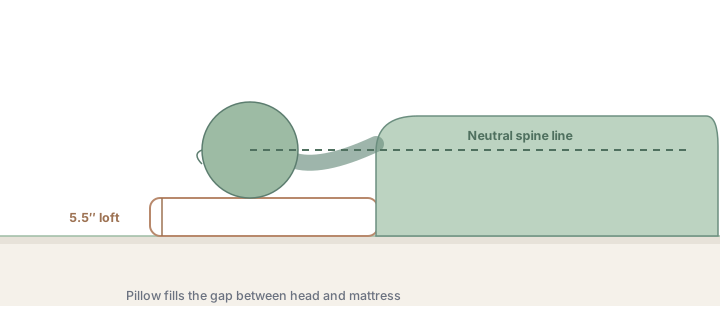
If you're a stomach-side combo sleeper, your loft requirements collide. Stomach sleeping wants a pillow that's basically a folded T-shirt under your forehead — 1 to 2 inches at most. Side sleeping wants 4 to 6 inches to fill the shoulder gap. There is no pillow on Earth that perfectly serves both.
The rule for this combo is: optimize for the more-damaging position, which is stomach. A too-tall pillow under your face when you're on your stomach forces your neck into extension on top of the rotation it's already in. That combination is what causes the morning stiffness and tingly arms that stomach sleepers complain about. A slightly-too-short pillow under your side, by comparison, causes much milder symptoms — your head dips a little, you might get a sore ear, but the spine isn't being twisted into a hostile angle for hours.
So: pick a pillow at the upper end of stomach-sleep loft — about 2.5 to 3.5 inches compressed — and accept that side sleeping will be partly under-supported. Many combo stomach-side sleepers naturally roll less often than back-side combos, so the side portions are shorter and the suboptimal support is easier to tolerate.
The case for sleeping on a thin or soft fill
For this combo specifically, fill choice matters more than for almost any other sleep style. The pillow has to compress dramatically under your face when you're on your stomach, then spring partly back up when you roll to your side.
The fills that do this best:
- Down (high fill power, 600+): The classic stomach-sleeper material. Down compresses to almost nothing under the weight of your head, then bounces back when you reposition. Soft enough that even when you're on your side, the lack of full loft doesn't create pressure points the way a firm pillow at the same height would.
- Down-alternative microfiber: A good budget option that mimics down's compressibility. Less durable than real down.
- Soft shredded memory foam (with a lot of fill removed): Some adjustable pillows can be emptied down to almost nothing, which works for stomach sleepers. Make sure the cover doesn't bunch when half-empty.
- Thin polyester: Fine for short-term stomach-sleep use but flattens quickly.
Fills to actively avoid for this combo:
- Solid memory foam: Holds its shape regardless of weight. Doesn't compress under your face the way you need it to. Too tall on your stomach, even at the lowest-loft models.
- Latex: Same problem as memory foam — springy and resistant to compression.
- Buckwheat: Conforms but doesn't truly compress, and the rustling sound bothers many stomach sleepers since your ear is closer to the pillow shell.
What loft works for the side portion of stomach-side sleeping
Here's the key insight that makes this combo workable: when you're a stomach-dominant sleeper who occasionally rolls to your side, you usually have your arm tucked under your head or shoulder. That arm partially fills the shoulder-mattress gap, which means you actually need less pillow loft than a pure side sleeper.
A pure side sleeper of average build needs 4.5-6 inches of compressed loft. A stomach-dominant combo sleeper, with an arm tucked, often needs only 3-4 inches because the arm is doing some of the support work. This is why a soft 2.5-3.5 inch pillow ends up being workable on your side even though it would be too short for a pure side sleeper.
The trick is making sure the pillow doesn't squish to zero under the side of your head when you roll. Down with sufficient fill power maintains enough resistance to keep your head from grounding out on the mattress. Adjustable shredded memory foam with about 40-50% of the fill removed gives a similar effect — flat enough for stomach, with enough fill left to keep your head off the bed on your side.
Some stomach-side combo sleepers do well with a thin pillow under their head AND a small support pillow or rolled towel under their chest, which lifts the upper body and reduces the neck rotation when they're on their stomach. Worth experimenting with.
Mattress firmness changes the math
On a soft or plush mattress, your face sinks slightly into the mattress when you're on your stomach. That sinking effectively lowers the required pillow loft to almost zero — sometimes no pillow at all is the right answer. Many stomach sleepers on plush mattresses sleep with their head directly on the mattress and use a pillow only as a hand-rest or under their chest.
On a firm mattress, no sinking happens, so you need that 2.5-3.5 inch pillow to keep your neck from being hyperextended downward.
For side sleeping on a soft mattress, your shoulder sinks in 2-3 inches, which is why the same low-loft pillow that works for stomach sleep can also be acceptable for side sleep on this combo — the mattress is doing the work that a tall pillow would do.
So: soft mattress + stomach-side combo = thinnest possible pillow, possibly no pillow at all. Firm mattress + stomach-side combo = thin pillow (2.5-3.5"), high-quality down or adjustable foam. Medium mattress, which is where most adults are = same thin-pillow advice as firm.
How to test a stomach-side combo pillow
Trial-and-error matters more for this combo than for any other, because the pillow that works for you depends heavily on your specific arm position, mattress firmness, and exact stomach-vs-side ratio. Don't buy without a return window of at least 30 nights.
Protocol I'd suggest:
- Night 1: Sleep on it however you naturally would, no overthinking.
- Mornings 2-7: Check for these symptoms: kinked neck on one side, tingly arm or hand on waking, headache at the base of your skull, sore lower back. Any of these means the pillow is too tall or too firm for stomach sleeping.
- Night 8-14: If symptoms persist and the pillow is adjustable, remove more fill. If not adjustable, swap to a softer/thinner pillow.
- Night 15-30: Final call. If your morning symptoms have resolved AND your side-sleep portions don't leave you with a sore ear or shoulder, the pillow works. Keep it. If either side has lingering symptoms, return it.
The number-one thing stomach-side combo sleepers do wrong is buying a pillow marketed as 'thin' that's still 3-4 inches solid foam. Solid foam at 3.5 inches doesn't compress under your face the way down at 3.5 inches does. The loft number alone doesn't tell you what you need to know — compressibility matters as much as height. Read the Sleep Foundation's stomach sleeper guide for additional position-specific guidance.
Independent video reviews worth watching
We don't test pillows in a lab. Instead, here are independent, hands-on video reviews from sleep and mattress channels that pair well with this guide — useful for seeing loft, fill, and feel before you buy. These are third-party reviews, not ours.
 ▶
▶Mattress Nerd
What Side Sleepers Need From Their Pillow ▶
▶Mattress Clarity
Best Pillows For Side Sleepers — Don't Buy A Pillow Without Watching This!Editor's takeaway
My mom rolls to her stomach when she's stressed, which is most of the time these days. The pillow I keep recommending for her — and what I'd buy for anyone in the same situation — is a soft down pillow with a fill power of 650+ at maybe 3-inch nominal loft, paired with a small body pillow she can hug if she wants the wrapped-in feeling. The body pillow has done more for her morning neck stiffness than any head pillow swap. The honest truth is that if you're sleeping on your stomach often enough to need a stomach-sleeper pillow, the biggest favor you can do yourself isn't finding the perfect pillow — it's slowly transitioning toward side sleeping with a body pillow to hug. That said, if you're committed to stomach sleeping, go thin, go soft, and replace the pillow more often than you'd replace other styles.
Frequently asked questions
Should stomach sleepers use a pillow at all?
Some shouldn't. If you sleep on a plush or soft mattress and your face sinks slightly into the surface, you may be better off with no pillow under your head at all — and a small pillow under your hips or chest instead, to reduce lower back compression. If you're on a firmer mattress or you wake up with a stiff neck from no pillow, then yes, use the thinnest pillow you can find — typically 2.5-3.5 inches of compressed loft in a soft, compressible fill like down.
What's the best fill type for stomach and side combo sleepers?
Down or down-alternative, almost always. Down compresses dramatically under your head when you're on your stomach (giving you near-zero effective loft) and springs back partly when you roll to your side. Adjustable shredded memory foam with most of the fill removed is a second option. Avoid solid memory foam, latex, and buckwheat — they don't compress enough under your face on your stomach to be safe for your neck.
Why does my neck hurt when I sleep on my stomach with a regular pillow?
Stomach sleeping already forces your neck into a 90-degree rotation. A pillow under your head adds extension to that rotation — meaning your neck is rotated AND tilted up at the same time, which puts the cervical spine in one of the worst positions it can be in for sustained periods. Most regular pillows are 4+ inches and built for back or side sleepers. On your stomach, that height is the source of your pain. A pillow under 3.5 inches, ideally down, fixes most of this for most people.
Can I just put a small pillow under my hips instead?
Yes, and it's often a better idea than focusing on the head pillow. A small pillow under your hips when you're on your stomach reduces the lower-back arch that stomach sleeping naturally causes, taking pressure off your lumbar spine. Many sleep coaches recommend it as the highest-leverage adjustment a stomach sleeper can make. Use a flat down pillow under your head AND a small pillow under your hips for the best stomach-sleep setup.
What loft works on the side portion of stomach-side sleeping?
Less than you'd expect — usually 3-4 inches, not the 4.5-6 inches a pure side sleeper needs. The reason is that stomach-dominant sleepers usually have an arm tucked under their head or shoulder when they roll to their side, and the arm partially fills the shoulder-mattress gap. So a pillow that's optimized for stomach (2.5-3.5") often works adequately on your side, especially if it's a soft down or down-alt that maintains some resistance under your head.
Should I try to stop sleeping on my stomach?
If you have morning neck pain, tingly arms, or recurring tension headaches, then probably yes. Stomach sleeping is the position most associated with chronic complaints in long-term sleep studies. Many self-identified stomach sleepers can transition to side sleeping by using a body pillow they can hug — the wrapped-in feeling is often what draws people to stomach sleeping in the first place. It takes 3-6 weeks of consistency to retrain. If you're symptom-free on your stomach, no need to change anything.
How often do stomach sleepers need to replace pillows?
More often than other positions. Down pillows used by stomach sleepers compress harder and faster because your full head weight is on a smaller pillow surface. Expect 18-30 months for a down pillow used primarily for stomach sleeping, versus 2-3 years for the same pillow used by a back or side sleeper. If your pillow has flattened to where it's basically zero loft and you're getting neck soreness from going flat against the mattress, it's time to replace.
Is there a pillow specifically designed for stomach-side combo sleepers?
A few brands market 'stomach sleeper' pillows but most are just thin polyester options that flatten quickly. The honest answer is that no widely-available pillow is engineered specifically for this combo — you're picking from the thin-pillow category and trying to find one with enough compressibility to work in both positions. The best moves are: pick high-fill-power down, look for a long return window, and accept that this combo always involves some compromise. If you find a pillow you love, buy a second one before they discontinue it.
More in this section
Pillows by Sleep Position — Combination Side Sleeper Guide
View all guides in this section →
Keep reading
Related guides
← Back to our main Best Pillow for Side Sleepers guide