Part of Pillows for Pain Relief — A Side Sleeper Pillar Guide
Best Knee Pillow for Side Sleepers with Back Pain
Best knee pillow for side sleepers with back pain — this is a search I take seriously, because my husband lived this exact scenario in 2024 when he tweaked his lower back lifting an AC unit. He's a side sleeper, the back ache wouldn't go away with rest alone, and the standard advice from his physical therapist was the cheapest part of the whole recovery: put a pillow between your knees when you sleep. A knee pillow doesn't treat back pain in any pharmaceutical sense. What it does is remove a specific overnight stressor — pelvic rotation that twists your lower spine — so your back has eight hours to recover instead of eight hours of additional minor strain. For side sleepers with low back pain, the right knee pillow is one of the highest-leverage, lowest-cost interventions there is.

The mechanical link between side sleeping and back pain
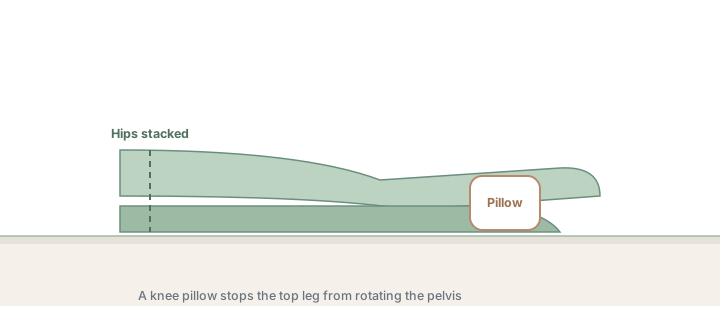
Side sleeping is generally good for your spine. It keeps your airway open, reduces reflux, and lets your back muscles relax in a roughly natural position. But there's one catch: when you lie on your side without anything between your legs, your top leg slides forward and downward. The top knee falls below the bottom knee. Your top hip rotates inward. Your pelvis tilts forward on that side. And your lumbar spine — connecting your pelvis to your rib cage — has to twist to compensate.
For a healthy back, this is a minor stress your body absorbs without complaint. For a back that's already irritated — disc bulge, muscle strain, sciatica, arthritic facet joints, post-surgical recovery — that overnight twist becomes a slow-motion aggravation. You wake up stiff, sore, or with the same pain you went to bed with. Sometimes worse.
The Cleveland Clinic's general guidance for low back pain explicitly mentions placing a pillow between the knees when side sleeping as a standard recommendation. The American Academy of Orthopaedic Surgeons similarly references pelvic alignment as a factor in low back comfort. The mechanism is well understood: keeping the pelvis level removes the lumbar twist, which removes the overnight aggravation.
My husband's PT explained it to him in plain words: 'Your back is trying to heal eight hours a night. The knee pillow is just stopping you from undoing the work.' That framing stuck with me. The knee pillow isn't doing anything magical. It's just removing a mechanical headwind.
What back pain sufferers specifically need from a knee pillow
Any knee pillow keeps your knees apart. But back pain sufferers have specific needs that not every pillow on the market handles well:
Loft that exactly matches your hip width. This is the single biggest factor. Too thin and your top hip still rotates forward. Too thick and your top hip rotates backward instead. The pillow needs to lift your top knee to exactly the height that keeps your hips level — and that height varies by body type. Most adults land between 5 and 7 inches. Broader-hipped or larger-framed people may need 7 to 8 inches.
Density that doesn't compress overnight. A soft pillow that loses an inch of loft by 3 a.m. is a pillow that's only doing half its job. Memory foam at 3+ lb/ft³ density holds up. Polyester fiberfill at any density usually doesn't.
Shape that stays put. Tossing and turning is common with back pain — you're trying to find a position that doesn't hurt. A wedge pillow that slides out the moment you shift is frustrating. Hourglass-shaped pillows grip between the legs better. Strap-on pillows stay put no matter what.
Cover material that doesn't add heat. Back pain that wakes you up is bad enough. Back pain plus a sweaty pillow between sticky legs is worse. Look for breathable cotton, bamboo viscose, or Tencel covers.
Compatibility with other support. Many back pain sufferers also use a body pillow, lumbar roll, or specialized mattress topper. The knee pillow needs to play well with whatever else is on the bed.
Knee pillow materials for back pain, compared
Material matters a lot for knee pillows used for back pain specifically, because the density and conformity of the foam determines whether your hip stays at the right height all night. Here's how the main options stack up — see the table below for the side-by-side.
How my husband actually uses his knee pillow
Concrete example, because I think specifics help more than general advice. My husband sleeps on his left side most nights (lower back issue is right-sided). His setup:
- Standard medium-firm queen mattress, about 18 months old
- One firm latex head pillow, 5.5 inches loft
- One straight 54-inch shredded memory foam body pillow, hugged in front
- One hourglass-shaped gel-infused memory foam knee pillow, about 6 inches at the wide ends, between his knees and lower thighs
The knee pillow is positioned so the narrow waist is at his knees and the wider ends cradle his lower thighs above and his upper calves below. He hugs the body pillow in front, and his top leg drapes over the body pillow's bottom edge, which adds a little extra height beyond just the knee pillow.
His nighttime back stiffness improved within about a week of starting this setup. The first two or three nights felt 'fiddly' because he kept adjusting the pillow position. By night four or five, it stayed put on its own and he stopped noticing it. That adjustment period is normal — give any new sleep gear at least seven nights before deciding it doesn't work.
He also does a daily PT routine, which matters more than the pillow. The pillow doesn't replace PT or movement-based treatment. It just stops him from undoing his PT every night while he sleeps.
Care, hygiene, and replacement
Knee pillows are intimate products that live between your legs all night. They get sweat, skin cells, and lotion residue. Keeping them clean isn't just about being tidy — it's about preserving the foam.
Wash the cover weekly. Same frequency as your sheets. Bamboo viscose, cotton, and Tencel covers tolerate weekly washing well. Avoid bleach, which can degrade the cover material and any silicone grip strips.
Clean the foam every 2 to 3 months. Wipe with a damp cloth and a tiny amount of gentle, fragrance-free soap. Let the foam air dry fully — 24 to 48 hours — before putting the cover back on. Damp foam grows mildew quickly.
Don't machine wash the foam. Memory foam absorbs water and takes days to dry, often deforming in the process. Almost all manufacturers explicitly say not to.
Rotate the pillow. Every couple of weeks, flip the pillow so a different surface is on top. This keeps the foam from developing a permanent compression dent where your top leg always rests.
Replacement schedule. Memory foam knee pillows for nightly use last about 18 to 24 months before they lose meaningful loft. Mark the purchase date somewhere — masking tape on the inside of the cover, or a note in your phone. Don't push it past two years for back pain use specifically. A flat knee pillow stops doing its job, and a back-pain sufferer needs the support more than the average user.
Knee pillow materials for back pain
| Material | Holds loft | Sleeps cool | What it does for back pain |
|---|---|---|---|
| Memory foam (solid) | Excellent | Average | Reliable hip lift; conforms to leg shape; widely recommended |
| Gel-infused memory foam | Excellent | Above average | Same support as memory foam, less heat retention overnight |
| Latex (Talalay) | Excellent | Good | Springier feel; durable; great if memory foam feels too sinky |
| Hypoallergenic poly fiber | Fair | Average | Soft and washable, but compresses by midnight — limited for back pain use |
| Shredded memory foam | Good (adjustable) | Average | Loft can be tuned by adding/removing fill — useful for hard-to-fit bodies |
Independent video reviews worth watching
We don't test pillows in a lab. Instead, here are independent, hands-on video reviews from sleep and mattress channels that pair well with this guide — useful for seeing loft, fill, and feel before you buy. These are third-party reviews, not ours.
 ▶
▶El Paso Manual Physical Therapy
Leg Pillow for Sciatica, Back & Hip Pain — Physical Therapist ReviewEditor's takeaway
What I'd tell a friend with side-sleeper low back pain, in plain words: spend $35 to $55 on an hourglass-shaped gel-infused memory foam knee pillow about 6 inches at the wide ends, place it from your lower thighs through your knees to your upper calves, give it ten nights of honest use, and pair it with whatever movement and PT your doctor recommends. That's what worked for my husband. It's not a miracle, it's mechanics. Removing the overnight lumbar twist gives your back an actual rest period, which lets the rest of your treatment plan do its job. If after two weeks of consistent use you feel no difference, the loft is probably wrong for your body — try a thicker version, or go talk to a PT.
Frequently asked questions
Does a knee pillow actually help low back pain?
For side sleepers with mechanical low back pain, yes — fairly reliably. The mechanism is straightforward: keeping your knees apart prevents your top hip from rotating forward, which prevents your lumbar spine from twisting overnight. That stops one specific overnight aggravation. It doesn't cure the underlying back issue (whether that's a disc, muscle strain, or arthritis), but it gives your back eight hours to recover without ongoing stress. Most side sleepers with low back pain report meaningful overnight improvement within a week of consistent use. If you don't notice a difference within two weeks, the pillow loft is probably wrong for your body, or your pain isn't primarily positional.
Memory foam or gel-infused memory foam for back pain?
Both work for the alignment job. The difference is heat. Solid memory foam sleeps a touch warmer because it's dense and doesn't breathe. Gel-infused memory foam has gel beads or layers that wick heat away, sleeping cooler. If your bedroom runs warm, if you wake up sweaty, or if you're in summer climate, gel-infused is worth the small price bump. If you sleep cold or your bedroom is air-conditioned, regular memory foam is fine. For pure back-pain support, the two perform almost identically. The cover material often matters more for heat than the fill.
How thick should a knee pillow be for back pain?
About 5 to 7 inches for most adults. The goal is to lift your top knee until your top hip stacks directly above your bottom hip — meaning your pelvis is level and your spine doesn't twist. Broader-hipped or larger-framed people typically need 6 to 8 inches. Petite or narrow-hipped people may need 4 to 5. The fastest way to test: lie on your side with the pillow in place, have a partner photograph you from behind. Your hips should be perfectly vertically stacked. If your top hip is still rotating forward, you need a thicker pillow. If your top leg feels lifted too high or your inner thigh aches in the morning, the pillow is too thick.
Can I use a knee pillow if my back pain is on a specific side?
Yes, and there's a smart way to do it. If your back pain is one-sided (say, right-sided low back pain), try sleeping on the opposite side (left side) with the knee pillow between your legs. This puts the painful side up, takes pressure off the affected muscles and joints, and lets gravity work with you instead of against you. Many physical therapists recommend this for one-sided lumbar issues. If sleeping on the non-painful side is uncomfortable, alternate — but the knee pillow should be in place either way to prevent pelvic rotation.
Will a knee pillow help with sciatica from back issues?
Often yes, indirectly. Sciatica is nerve pain that radiates from the lower back down one leg, usually caused by nerve compression somewhere along the path. A knee pillow can reduce pelvic tilt and lumbar twist during sleep, which can reduce mechanical compression on the affected nerve overnight. Many sciatica sufferers report better mornings with a knee pillow. That said, sciatica has many causes — disc bulge, piriformis muscle, spinal stenosis, etc. — and the right treatment depends on what's actually compressing the nerve. If you have diagnosed sciatica, work with your doctor or PT. A knee pillow is a comfort measure, not a treatment.
Can I use a body pillow instead of a knee pillow for back pain?
You can, and many people do, but they target slightly different problems. A body pillow hugged in front gives you an upper-body anchor — your top arm rests on it, your top leg drapes over the bottom edge. That bottom edge functions as a kind of built-in knee support. For mild back pain, this combination often works on its own. For more pronounced back pain, a dedicated knee pillow gives more precise hip alignment because it sits in exactly the right place and is the right thickness for that specific job. Many back-pain sleepers use both: body pillow for upper-body alignment, knee pillow for lower-body alignment.
How long should I try a knee pillow before deciding it doesn't help?
At least seven full nights, preferably ten to fourteen. The first two or three nights are usually adjustment — your body has gotten used to sleeping in its old (suboptimal) position and the new alignment feels strange. By night five or six, you should be sleeping through without noticing the pillow. By night ten, if you're a side sleeper with low back pain and the pillow is the right loft, you should be feeling at least mild morning improvement. If you've given it two weeks of consistent nightly use and feel no different, the pillow loft is probably wrong, or your pain isn't primarily positional, and it's time to see a professional.
Are there knee pillows specifically for sciatica or herniated discs?
There's marketing language for it, but the underlying product is the same: a knee pillow that keeps your hips aligned. Some brands label their pillows 'sciatica relief' or 'lumbar support knee pillow,' but the foam, loft, and shape are usually equivalent to a standard memory foam knee pillow. Don't pay a big premium for a 'sciatica' label — pay for materials, certifications, and the right loft for your body. If your sciatica is severe, talk to a doctor or PT about whether a wedge pillow, lumbar roll, or different mattress firmness might also help.
Can a knee pillow help post-surgery back pain?
It can, but follow your surgeon's instructions first. After back surgery — discectomy, fusion, laminectomy — your surgeon usually gives you specific sleep position guidance and may recommend specific pillows or wedges. A standard knee pillow is often appropriate once initial recovery is done, but every surgery is different. Ask your surgeon or post-op PT before adopting any new sleep aid. The same caveat applies for hip and knee surgeries — knee pillows are commonly recommended post-hip-replacement, but always with surgeon clearance.
Does the brand matter for a knee pillow?
Less than the materials and the certifications. A knee pillow is a simple product — foam, shape, cover. What matters is foam density (3+ lb/ft³ memory foam), foam certification (CertiPUR-US in the US), cover breathability, and a return window long enough to test it. There are excellent knee pillows from no-name Amazon sellers and mediocre ones from premium brands. Read verified-buyer reviews for the specific model, especially reviews from people in similar body types and pain situations to you. Don't pay extra for brand name when the materials are the same as a $30 option.
Should I replace my mattress before buying a knee pillow?
Knee pillow first. It's cheaper, faster to test, and addresses a specific mechanical problem (pelvic rotation) that no mattress can fully solve. A $40 knee pillow that you can return in 30 days is a lower-risk experiment than a $1,500 mattress. If the knee pillow alone resolves your overnight back pain, you've saved a fortune. If the knee pillow helps but not completely, your mattress may be contributing — at that point, look at a mattress topper before a full new mattress. A new mattress is the last resort, not the first move, for sleep-related back pain.
More in this section
Pillows for Pain Relief — A Side Sleeper Pillar Guide
View all guides in this section →
Keep reading
Related guides
← Back to our main Best Pillow for Side Sleepers guide