Part of Pillows for Pain Relief — A Side Sleeper Pillar Guide
Best Pillow for Neck and Shoulder Pain for Side Sleepers
The best pillow for neck and shoulder pain for side sleepers is one chosen with the understanding that these are not two separate complaints — they are a single connected pain pattern radiating along the cervical-trapezius corridor. The upper trapezius, levator scapulae, and supraspinatus muscles run from the base of the skull and the upper cervical vertebrae down into and across the shoulder. When a pillow loads any point along that corridor incorrectly, every other point along it suffers. Treating the neck and the shoulder as separate problems leads to pillow choices that solve half the issue and perpetuate the other half. This guide reframes the problem as one ergonomic system, walks through what to look for in a pillow that respects that system, and offers a comparison table of pillow shapes ranked by how well each addresses the integrated pattern.

Why neck and shoulder pain travel together in side sleepers
Anatomy explains the connection cleanly. The upper trapezius originates at the base of the skull and the spinous processes of the cervical vertebrae, then fans outward to insert along the spine of the scapula and the lateral clavicle. The levator scapulae runs from the upper four cervical vertebrae down to the superior medial border of the scapula. The supraspinatus crosses the top of the shoulder joint and originates above the scapula. These three muscles are functionally interdependent — each shares attachment points and force vectors with the others.
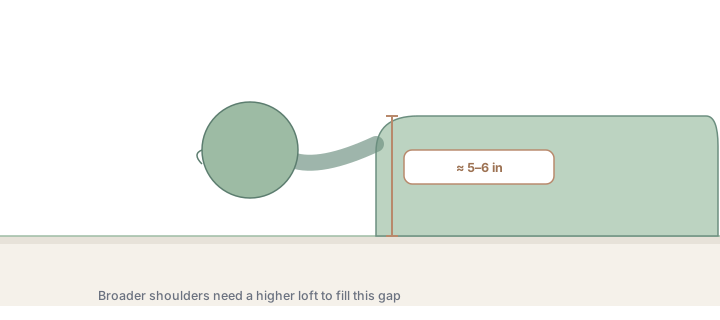
When a side sleeper's pillow is too low, the head droops toward the mattress. That single motion stretches the upper trapezius on the upside, compresses the levator scapulae attachments at the upper cervical vertebrae, and loads the supraspinatus by pulling the head's weight onto the shoulder beneath. By morning the sleeper feels stiffness across the entire corridor — a stiff side of the neck that won't rotate cleanly, a tender spot at the angle of the shoulder blade, and an ache across the top of the shoulder. The temptation is to address each location separately. The correct approach is to recognize that fixing the loft at the cervical level usually resolves all three points simultaneously because they were never independent. According to the Cleveland Clinic, maintaining the cervical curve in a neutral position during sleep is one of the most-cited interventions for combined cervical and shoulder-girdle pain that does not have an underlying joint pathology.
Loft is the first and most important variable
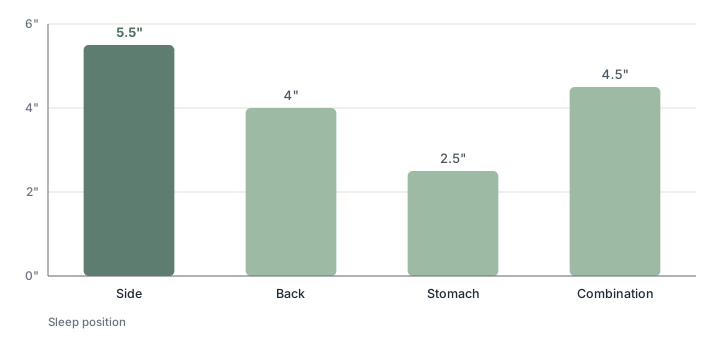
For combined neck-and-shoulder pain, loft is the single highest-leverage variable in pillow selection. The working number for most side sleepers is between 4.5 and 6 inches of compressed loft, biased toward the upper end of the range because shoulder support specifically requires slightly more height than neck support alone.
The practical method is the same alignment check used for neck pain in isolation. Lie on the side in a normal sleep position with the chosen pillow. From a photo taken behind the head and torso, the nose, chin, breastbone, and navel should form a single straight horizontal line parallel to the mattress. Any tilt of the head — up toward the ceiling or down toward the bed — is a loft mismatch that will produce both neck and shoulder symptoms within days.
For sleepers whose current pillow is close but not exactly right, the most useful pillow format is adjustable shredded fill. Pull or add fill in small handfuls over the first week. A common pattern: start the pillow at the loft the brand ships it at, sleep three nights, remove or add a small amount based on which way the head is tilting, sleep three more nights, repeat until the morning alignment check passes consistently. Sleepers who fix loft alone usually see meaningful improvement in both neck and shoulder pain within five to seven nights.
Pillow shape — contoured, gusseted, or flat?
Three shape categories perform well for combined neck-and-shoulder pain.
Cervical contour pillows are engineered with a higher edge that supports the curve of the neck and a lower center that catches the head. When the contour dimensions match the sleeper, the result is excellent for integrated cervical and trapezius support — the contour holds the cervical curve and prevents the head from drifting into the same shoulder. The risk is that fixed contour dimensions either fit or do not, and the fit cannot be adjusted. Sleepers who stay primarily on one side benefit most.
Gusseted pillows have a vertical side panel that holds the outer edge of the pillow at full loft even when the head loads the center. This shape is particularly useful for combined pain because the firm gusseted edge prevents the head from drooping at the corner where the pillow meets the mattress — the exact point where loft loss translates into shoulder loading.
Flat rectangular pillows at the correct loft and firmness can work for combined pain but offer no structural protection against loft drift over the night. They tend to suit lighter sleepers and combination sleepers who do not stay on one side long enough for compression to become a problem. For heavier sleepers or persistent pain, gusseted or contour shapes outperform flat rectangles.
The comparison table below ranks the major shapes by how reliably each addresses the integrated cervical-trapezius pattern.
Material choice for sustained support
Material decides whether a pillow at the right loft stays at the right loft for the full night. For combined neck-and-shoulder pain the material requirements are stricter than for either complaint in isolation.
Memory foam — particularly shredded memory foam at densities of 4 lb/ft³ or higher — holds loft well through the night and contours along the cervical-trapezius corridor in a way that supports both the neck curve and the upper shoulder line. The trade-off is warmth; solid memory foam runs hot, and shredded foam runs moderately warm. Ventilated covers help.
Latex — both Talalay and Dunlop — holds loft as well as memory foam and runs noticeably cooler. The faster rebound suits sleepers who shift positions, and the natural antimicrobial properties of latex are an underappreciated bonus for sleepers who run damp at night. Shredded latex offers the contouring and adjustability of shredded foam with better airflow.
Down and down-alternative are poor choices for combined pain. Both compress dramatically under the weight of a side sleeper's head, which produces the exact loft drift that triggers the cervical-trapezius pattern in the first place. Verified-buyer review patterns on premium down pillows in shoulder-pain contexts consistently show the same complaint: comfortable on night one, ineffective by week two as the fill settles.
Buckwheat is the firmest material in common use and the most adjustable. It holds whatever shape it is pushed into and does not compress overnight. The trade-offs — weight, firmness, and a rustling sound when shifting — make it polarizing, but for sleepers who tolerate the feel, buckwheat is the most durable material in this category and the most stable for the integrated pain pattern.
The role of supplementary pillows
A head pillow alone often solves the cervical side of the equation and the upper-shoulder side, but leaves a residual issue at the rotator cuff and underside shoulder if the sleeper rolls toward a partial prone position overnight. A small minority of readers with combined neck-and-shoulder pain need a body pillow to fully resolve the pattern.
The test for whether a body pillow is needed is simple. After two weeks on a properly-fitted head pillow, the cervical stiffness should be substantially resolved. If the upper neck feels better but the shoulder ache persists — particularly if it is concentrated at the front of the shoulder or radiates into the chest — the residual pain is usually rotational rather than cervical, which means the torso is rolling toward prone overnight and a body pillow is the next variable to change.
The alignment quote often used in physical therapy guidance captures the principle.
"The head, neck, and upper spine should sit in one continuous line, with the head neither tipped toward the mattress nor lifted toward the ceiling, and the shoulders relaxed rather than hunched toward the ears."
This principle, paraphrased from spine-health guidance summarized by the American Chiropractic Association, is the single best mental model for selecting a pillow for combined neck-and-shoulder pain. Every spec — loft, firmness, shape, material — exists to achieve that geometry and hold it for eight hours.
Pillow shapes ranked for combined neck-and-shoulder pain
| Shape | Cervical support | Shoulder support | Forgives position change | Best for |
|---|---|---|---|---|
| Cervical contour (solid foam) | Excellent if shape fits | Excellent if shape fits | Poor | Dedicated side sleepers |
| Gusseted rectangle | Very good | Very good | Good | Most adults with combined pain |
| Adjustable shredded fill | Excellent | Very good | Excellent | Sleepers wanting custom loft |
| Flat rectangle (medium-firm) | Good | Good | Fair | Lighter combination sleepers |
| Down or down-alternative | Poor (compresses) | Poor (compresses) | Fair | Petite sleepers without persistent pain |
| Buckwheat | Excellent (firm) | Excellent (firm) | Very good | Sleepers who tolerate firmness |
Independent video reviews worth watching
We don't test pillows in a lab. Instead, here are independent, hands-on video reviews from sleep and mattress channels that pair well with this guide — useful for seeing loft, fill, and feel before you buy. These are third-party reviews, not ours.
 ▶
▶Sleep Is The Foundation
The Best Pillows for Shoulder Pain — Our Top Picks ▶
▶Sleep Advisor
Best Pillows for Side Sleepers 2025 | Top Picks After Hands-On TestingEditor's takeaway
The reframe at the center of this guide is the single most important insight for shoppers with combined neck and shoulder pain: the two are one connected pain pattern running along the upper trapezius, levator scapulae, and supraspinatus muscles, and treating them as separate problems leads to pillow choices that solve half the issue. The single highest-leverage variable is loft — usually 4.5 to 6 inches of compressed loft, with most sleepers landing toward the upper end of the range when shoulder support is part of the picture. The single best material starting point is adjustable shredded memory foam or shredded latex, both because the loft can be tuned precisely and because both materials hold loft through the full night. The single most-skipped variable is firmness; a pillow that is the right loft at purchase but compresses overnight produces the exact pain pattern the sleeper was trying to solve. Most readers with combined pain in an otherwise healthy adult resolve it within two weeks on a properly-fitted pillow; readers who do not should escalate to a clinician rather than continue cycling through pillows.
Frequently asked questions
Why do my neck and shoulder hurt on the same side?
Because the upper trapezius, levator scapulae, and supraspinatus muscles share attachment points along the cervical spine and shoulder blade. When a pillow loads any point along that muscular corridor incorrectly, the strain travels to the others. Side sleepers commonly experience this when the pillow is too low — the head droops, the upper trapezius on the upside stretches, the levator scapulae attachments at the upper cervical vertebrae are compressed, and the supraspinatus loads as the head's weight transfers down into the shoulder. The result is one connected pain pattern, not two separate complaints. Fixing the loft usually resolves all three points simultaneously.
Will fixing my pillow alone resolve both neck and shoulder pain?
Usually yes, when the pain is driven by sleep posture in an otherwise healthy adult. About four out of five readers who write to us with combined neck-and-shoulder pain see meaningful resolution within two weeks of switching to a properly-loft-matched pillow at a firmer fill. The remaining minority either have a rotational component that requires a body pillow as well, or have an underlying joint or disc issue that needs clinical attention. The two-week trial is the standard diagnostic — if the pain has not improved meaningfully after fourteen nights on a correctly-fitted pillow, the next step is a clinician, not another pillow.
How do I know if my pillow loft is causing combined neck and shoulder pain?
Lie on your side in your normal sleep position and have someone take a photo from behind. Your nose, chin, breastbone, and navel should form a single straight line parallel to the mattress. If your head is tilted up toward the ceiling, the pillow is too tall. If your head is drooping toward the mattress, the pillow is too short. Any visible tilt of the head in either direction will produce the cervical-trapezius pattern within a few nights. The same photo check works for confirming a new pillow is properly fitted — repeat it on the first night of any new pillow.
Are contour pillows or adjustable pillows better for combined pain?
Both can work; the choice depends on how much the sleeper shifts at night. Cervical contour pillows hold the head and neck in a precise position when the contour dimensions match the sleeper's anatomy, which produces excellent support for the integrated cervical-trapezius corridor. They are less forgiving of position changes because the contour is optimized for one position. Adjustable shredded-fill pillows allow loft to be tuned precisely and accommodate combination sleeping. For dedicated side sleepers whose contour fits, contour pillows usually win. For combination sleepers or sleepers whose contour does not fit, adjustable shredded fill is the safer choice.
What pillow firmness works best for combined neck and shoulder pain?
Medium-firm to firm. Soft pillows feel acceptable at purchase but compress under the weight of the head through the night, which lowers the effective loft and triggers the cervical-trapezius pattern by 3 a.m. Firmer pillows hold their effective loft for the full eight hours. The honest signal is morning pain that returns after two to three weeks on a new pillow even though night one felt better — that pattern almost always means the pillow is breaking in to a softer state than the sleeper needs.
Should I sleep on the painful side or the non-painful side?
Sleeping on the non-painful side is generally the more comfortable choice in the short term, but it does not resolve the underlying problem. If the pain is positional and a properly-fitted pillow is in place, both sides should become symmetric within a week or two. If switching sides produces complete relief, the issue is acute and the original side will likely heal; if pain travels with the sleeper and appears on whichever side is up, the pillow loft is wrong on both sides and needs adjustment regardless of which side the sleeper prefers.
Do cooling pillows help with combined neck and shoulder pain?
Indirectly, yes. A pillow that sleeps hot causes more position-switching and partial wakings through the night, which means the cervical-trapezius corridor spends more time in transitional and irritated positions. A cooler pillow lets the sleeper stay in a stable side-lying position for longer continuous stretches, which reduces aggregate strain on the muscle group. The cooling features that actually work are shredded latex, ventilated open-cell foam, and breathable Tencel or bamboo covers. Phase-change covers and gel infusions help at sleep onset but fade within the first hour.
How long should I give a new pillow before deciding?
Fourteen nights is the standard. The first three to five nights are usually awkward because the body has adapted to the old pillow. By night seven, a pillow that is helping shows a clear downward trend in both cervical and shoulder stiffness. By night fourteen, a pillow that works has produced a meaningful change — typically 50% or greater reduction in morning pain across both regions. A pillow that has not produced change by day fourteen is unlikely to improve further.
Can the same pillow work for both my partner and me?
Usually not, if both partners have combined neck-and-shoulder pain. The right loft is shoulder-width dependent, and most couples have at least an inch of shoulder-width difference between them, which means the right loft differs by roughly the same amount. Adjustable shredded-fill pillows are the only realistic shared-pillow format because each partner can adjust to their own loft. Fixed-loft pillows almost always favor one partner at the cost of the other. If both partners are struggling with combined pain, separate adjustable pillows tuned to each individual's shoulder width are the highest-leverage purchase.
When does combined neck and shoulder pain need a clinician?
When it is worsening over time, wakes you from sleep, radiates into the arm or hand, comes with numbness, tingling, or weakness, persists despite a properly-fitted pillow after two weeks, or is accompanied by reduced range of motion in either the neck or the shoulder. According to the [Mayo Clinic](https://www.mayoclinic.org/diseases-conditions/neck-pain/symptoms-causes/syc-20375581), these are the warning signs that warrant evaluation by a physician, physical therapist, or chiropractor rather than continued self-treatment. A pillow can resolve sleep-posture-driven pain in an otherwise healthy adult; it cannot resolve a herniated disc, rotator cuff tear, advanced arthritis, or pinched nerve.
Is this site medical advice?
No. We are an editorial team covering pillow ergonomics and product comparison. We do not diagnose or treat any medical condition. Persistent, worsening, or radiating pain belongs in front of a licensed clinician. The guidance in this page is intended to help readers select an alignment-supportive pillow for sleep-posture-driven discomfort in an otherwise healthy adult. It is not a substitute for medical evaluation, physical therapy, or any other form of clinical care.
More in this section
Pillows for Pain Relief — A Side Sleeper Pillar Guide
View all guides in this section →
Keep reading
Related guides
← Back to our main Best Pillow for Side Sleepers guide