Side Sleeper Pillow Shop: Every Pillow We Recommend, by Need
A side sleeper pillow is any pillow built to fill the gap between your ear and the mattress when you lie on your side, and this page gathers every one I currently recommend into a single catalogue. Use the buttons to narrow it by need or by price band. Below the catalogue I explain the main pillow types, how to read an Amazon listing without being misled, what the certification labels really cover, and when to wash or replace what you buy. I research these pillows from listings, brand pages and published sleep guidance; I don't test them by hand.

Every pillow we recommend (26)
Showing 26 of 26
Beckham · Budget
Hotel Collection (2-pack)
Down alternative (gel fiber) · 8 in (plush, listed)
Budget · Side + back · Soft
Bedsure · Budget
Down Alternative Pillows (2-pack)
Down alternative · 5.2 in listed
Budget · Soft
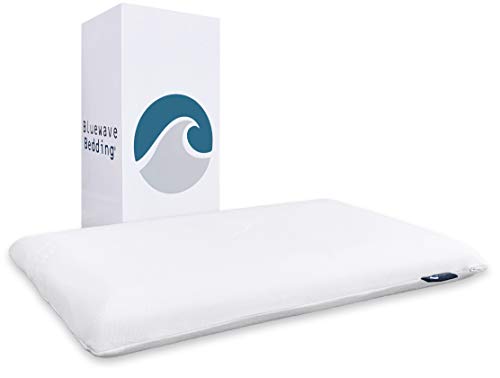
Bluewave Bedding · Budget
Ultra Slim Gel Memory Foam
Slim memory foam · 2.75 in (1.75–4 in offered)
Side + stomach · Petite frame · Memory foam
Casper · Mid-range
Original Pillow
Pillow-in-pillow microfiber · Mid-loft; 9 in uncompressed (brand)
Side + back · Soft
Contour Legacy · Budget
Leg & Knee Pillow
Knee pillow (memory foam)
Knee pillow · Budget
Coop Home Goods · Mid-range
Adjustable Body Pillow
Body pillow (adjustable foam)
Body pillow · Adjustable
Coop Home Goods · Premium
Cool+ Cut-Out
Cut-out, adjustable foam · Not stated; adjustable
Arm under pillow · Shoulder pain · Cooling
Coop Home Goods · Mid-range
Original Crescent
Crescent, adjustable foam · Not stated; adjustable
Shoulder pain · Arm under pillow · Side + back
Coop Home Goods · Premium
Eden Adjustable
Adjustable shredded foam · 8 in listed; adjustable
Side + back · Side + stomach · Petite frame
Coop Home Goods · Mid-range
Original Adjustable
Adjustable shredded foam · 8 in listed; adjustable
Side + back · Broad shoulders · Neck pain
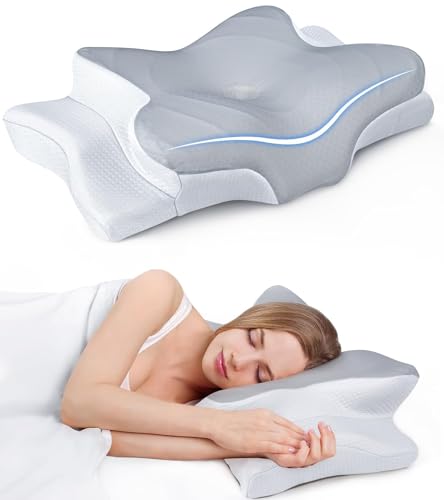
Cozyplayer · Budget
Ultra Pain Relief Cooling Cervical Pillow
Contour cervical (memory foam) · 5.1 in; height changes by rotating it
Neck pain · Cervical · Cooling
DreamyBlue · Mid-range
Signature Adjustable Pillow
Adjustable shredded foam · 8 in listed; adjustable
Broad shoulders · Adjustable · Neck pain
Everlasting Comfort · Budget
Memory Foam Knee Pillow
Knee pillow (memory foam, strap) · 10.5 in tall
Knee pillow · Budget
5 STARS UNITED · Budget
Knee Pillow
Knee pillow (memory foam) · 6 in tall
Knee pillow · Budget
KUCEY · Budget
Cooling Side Sleeper Pillow
Curved side-sleeper, shredded foam · Not stated; adjustable
Shoulder pain · Cooling · Budget
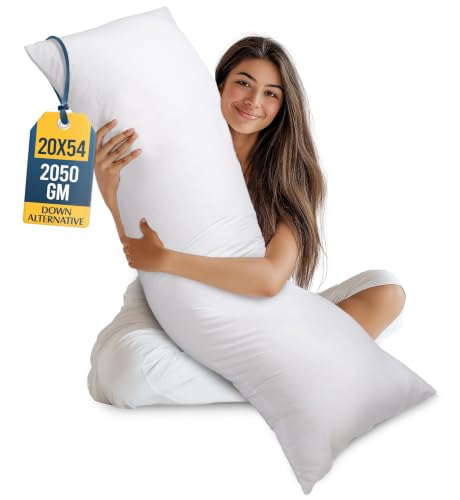
Oubonun · Budget
Adjustable Body Pillow
Body pillow (adjustable fiber) · 10 in tall
Body pillow · Firm · Adjustable
Purple · Premium
Harmony Pillow
Talalay latex + gel grid · 6.5 in (medium); 5.5 / 7.5 in offered
Cooling · Broad shoulders
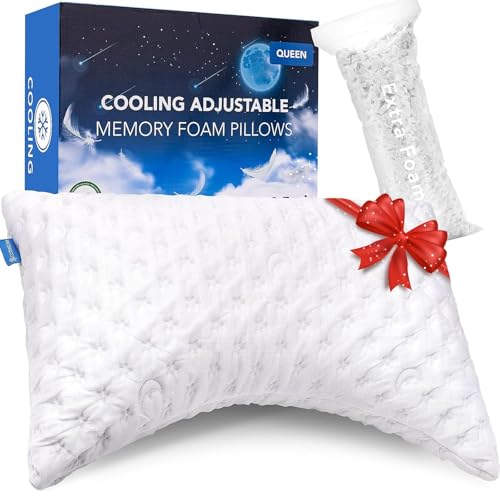
QUTOOL · Budget
Cooling Shredded Memory Foam (2-pack)
Adjustable shredded foam · 6 in listed; adjustable
Cooling · Budget · Adjustable
Royal Therapy · Mid-range
Memory Foam Contour Pillow
Contour cervical (memory foam, layered) · 5 in (Queen); 6.5 in Extra size
Neck pain · Shoulder pain · Cervical
Sidney Sleep · Budget
Adjustable Curved Pillow
Curved side-sleeper, adjustable fill · 7 in listed; adjustable
Shoulder pain · Arm under pillow · Neck pain
SUPA MODERN · Budget
Cooling Shredded Memory Foam (2-pack)
Adjustable shredded foam · 7 in listed; adjustable
Cooling · Budget · Adjustable
Utopia Bedding · Budget
Gusseted Pillow (2-pack)
Gusseted fiber pillow · 5 in listed
Budget · Side + back · Soft
UTTU · Mid-range
Sandwich Cervical Pillow
Contour cervical (removable layer) · 5.2/4.5 in; 4.0/3.2 in with layer removed
Neck pain · Cervical · Petite frame
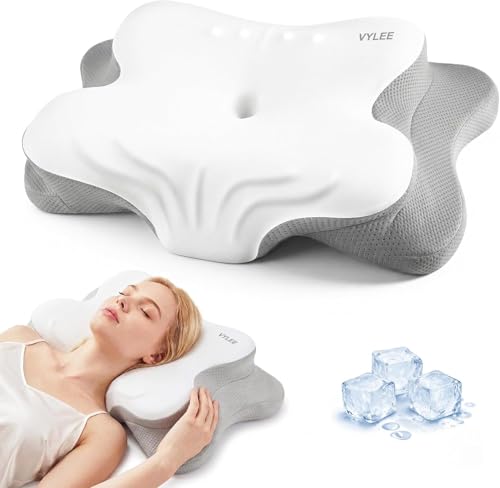
VYLEE · Mid-range
Cervical Neck Pillow
Contour cervical (dual height) · 3.9 in / 4.9 in (two edges)
Neck pain · Cervical · Petite frame
WEEKENDER · Budget
Ventilated Gel Memory Foam
Solid memory foam (ventilated) · 5 in listed
Firm · Budget · Memory foam











We earn a commission if you buy through these links, at no extra cost to you. As an Amazon Associate we earn from qualifying purchases. Prices and availability are shown on Amazon and can change.
Start here: how this shop is organized
Every product in the catalogue above comes from the same short list that powers our main guide to the best pillow for side sleepers. Each card links to Amazon, and where I have written a full review, it links to that as well. Directly below this section is a list of every buying guide in the shop, each built around one kind of sleeper: neck pain, broad shoulders, side-and-back sleeping, and so on.
If you already know your problem, jump to that guide. If you don't, read on. The short version comes from a Sleep Foundation guide reviewed by a physical therapist: side sleepers usually need a medium to high loft, which 'usually means using a pillow that is at least 4 inches thick.' The same page adds that broad shoulders may need more than 6 inches, and that if you sink deeply into your bed, even 4 inches may be too high. That spread is why the catalogue holds so many shapes and heights.
One caution before the details: no clinical source names a single best brand. Cleveland Clinic quotes chiropractor Andrew Bang: 'There isn't one type of pillow that will satisfy everyone's needs' (Cleveland Clinic).
All side sleeper pillows (12)
- AdjustableBest Adjustable Pillow for Side Sleepers: Picks and How to Set Them UpShredded-fill pillows you can thin out or top up, plus a step-by-step guide to setting the height for your shoulders and mattress.
- Body pillowsBest Body Pillow for Side SleepersThree full-length body pillows compared on fill, firmness and bed space, with careful notes on side sleeping in pregnancy.
- CervicalBest Cervical Pillow for Side Sleepers: How Contour Pillows Work and Who They SuitWhat a contour pillow's neck roll does, the trial evidence for and against it, how to pick its height, and four contour picks.
- CoolingBest Cooling Pillow for Side SleepersNo study shows a cooling cover lowers your temperature. Here is what does help a hot side sleeper, and five pillows built around airflow.
- FirmBest Firm Pillow for Side SleepersFirm is not the same as tall. Five pillows that hold their height under your head, from solid foam to packed shredded fill.
- Knee pillowsBest Knee Pillow for Side SleepersThree knee pillows compared on height (6 in vs 10.5 in), staying in place, and who each suits, with the clinical guidance behind them.
- Memory foamBest Memory Foam Pillow for Side SleepersWhat memory foam is, solid vs shredded, what the CertiPUR-US label covers, and five foam pillows matched to shoulder width.
- Side + backBest Pillow for Side and Back Sleepers: One Pillow, Two HeightsFor people who switch between side and back: adjustable, two-height contour and mid-loft pillows, matched to your shoulders and mattress.
- Side + stomachBest Pillow for Side and Stomach Sleepers: Why Lower WinsSwitch between your side and your stomach? Why the usual tall side-sleeper pillow is wrong for you, and the thin and adjustable pillows that fit.
- Broad shouldersBest Pillow for Side Sleepers with Broad Shoulders: Tall, Adjustable and Firm Enough to HoldTall, adjustable pillows for bigger frames, with the loft guidance behind them and the reason soft fiber pillows sink under broad shoulders.
- Neck painBest Pillow for Side Sleepers with Neck Pain: 5 Picks and the Fit Rules Behind ThemWhy side sleeping strains a sore neck, how height, shape and fill each play in, and five contour and adjustable picks.
- Shoulder painBest Pillow for Side Sleepers with Shoulder Pain: Shapes That Spare the Bottom ShoulderCurved, crescent and cut-out pillows that leave room for a sore bottom shoulder, plus the rotator cuff sleep advice clinicians actually give.
7 kinds of side sleeper pillow, and who each one suits
Almost everything in the catalogue falls into one of seven groups.
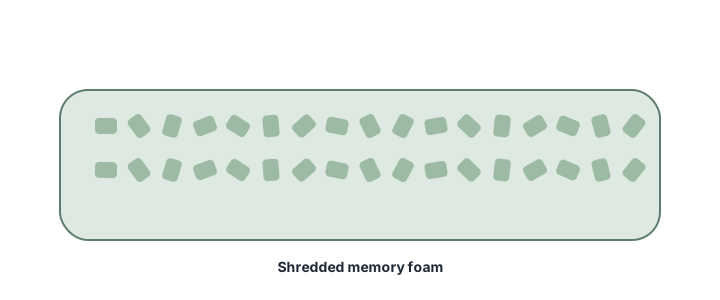
1. Adjustable shredded foam
A zippered case of cut-up memory foam, often blended with fiber. You add or remove fill until the height feels right. The Sleep Foundation guide above says adjustable pillows 'can be a good choice if you are unsure what pillow loft you need.' Several list 8 inches when full, including the Coop Original and DreamyBlue, so most people take some fill out. See the best adjustable pillow for side sleepers and the memory foam picks.
2. Contour and cervical foam
A molded block with a raised edge under the neck and a dip for the head. Harvard Health tells side sleepers to use 'a pillow that is higher under your neck than your head' (Harvard Health). The trial evidence on contour shapes is mixed, though: a randomized study of 106 side sleepers found 'no evidence that the use of a foam contour pillow has advantages over the regular shaped pillows' (Gordon et al., 2009). Browse them on the cervical pillow page or the neck pain page.
3. Curved, crescent and cut-out
These have a scooped edge or notch so the pillow sits closer to your shoulder. The shoulder pain guide compares the Coop Crescent, Coop Cool+ Cut-Out, Sidney Sleep and Kucey designs.
4. Down alternative
Soft synthetic fiber, often sold in 2-packs. They feel plush but are not adjustable, and Amazon's buyer summaries for several mention flattening. They tend to suit people who also spend time on their back; see the side and back sleeper page.
5. Slim solid foam
Thin, fixed-height foam such as the Bluewave, offered in heights from 1.75 to 4 inches. Most side sleepers need the taller options; the thin ones fit people who also sleep on their stomach. That trade-off is on the side and stomach sleeper page.
6. Knee pillows
Small pillows that sit between the knees. Mayo Clinic says 'flexing your knees and having a pillow between your legs can help align your spine, pelvis and hips' (Mayo Clinic). Picks are on the knee pillow page.
7. Body pillows
Long pillows, about 54 inches for the ones in the catalogue, that you hug and hook a leg over. The same Mayo page adds: 'Use a full-length body pillow if you prefer.' Compare them on the body pillow page.
Two needs cut across all seven groups. If you want a firmer feel, start with the firm pillow page; if you run warm, start with the cooling pillow page. Broad-shouldered readers should go straight to the broad shoulders page.
How to use the filters above
The catalogue has two rows of buttons. The first filters by need: neck pain, shoulder pain, broad shoulders, cooling, firm, soft, adjustable, knee pillow, body pillow and more. The second filters by price band. The rows work together, so Shoulder pain plus Budget shows only the lower-priced pillows I have tagged for shoulder pain.
A few tips:
- Start with your main problem, not your budget. A cheap pillow at the wrong height is no bargain.
- If a filter leaves only one or two products, clear the price band before deciding nothing fits.
- Need tags are my editorial calls, based on each listing's height, shape and fill. They are not the brands' own labels.
- Each card shows the pillow type and, where the listing gives one, the listed height.
- The buttons only change what is shown. Every product is on the page from the start, so nothing is hidden from readers with scripts turned off.
Reading an Amazon pillow listing: height, packs and sizes
Most of the facts on a product card come from its Amazon listing, and listings are not always right. When I went through them for this catalogue, these were the things worth watching.
'Item Thickness' is not always the real height. The seller fills in that field. On the Beckham Hotel Collection listing it reads 0.25 micrometer, which is plainly an error, so I ignored it. On the Casper Original it reads 2 inches, while Casper's own site gives 9 inches uncompressed. When the two disagree, I record what the brand states and say where it came from.
Height is usually measured full and uncompressed. An 8-inch adjustable pillow is 8 inches before your head lands on it and before you remove any fill. Treat the number as a ceiling, not the height you will sleep at.
Measurements come with a margin. The Cozyplayer listing gives 5.1 inches but asks buyers to 'allow a slight measurement deviation of 0.5 to 1 inch.' That matters when the guidance itself spans only a few inches.
Other fields can be wrong too. The Coop Crescent's 'Item Weight' reads 9.6 ounces, which looks implausible for a full-size shredded-foam pillow. I record fields like that as stated and build no advice on them.
Check the pack count. The Beckham, Bedsure, Qutool and Supa Modern pillows are sold as 2-packs, and one listing often offers single, 2-pack and 4-pack variations side by side. Make sure the variation you pick is the one you meant.
Check the size against your pillowcase. Queen pillows in the catalogue run from about 26 to 30 inches long. Larger ones, like the DreamyBlue at 30 by 20 inches, may overhang a standard case. Contour pillows run smaller: the Royal Therapy Queen is 24 by 14 inches.
Check where the warranty comes from. Coop's 5-year warranty and 100-night guarantee appear on Coop's own site; the Amazon listing states neither.
What do CertiPUR-US, OEKO-TEX and GREENGUARD actually mean?
You will see these labels on many cards. Each is narrower than the marketing around it suggests.
CertiPUR-US certifies foam, not the whole pillow. Its FAQ says the program 'only certifies flexible polyurethane foam' and that 'Latex foam is outside the scope of our certification' (CertiPUR-US FAQ). Certified foams are made without formaldehyde, ozone depleters, mercury, lead and other heavy metals, or phthalates regulated by the US Consumer Product Safety Commission, and they have low VOC emissions, under 0.5 parts per million (CertiPUR-US). Note the word low: the program certifies foam as low in emissions, not free of them. Foam producers recertify every six months in the first year and annually after that.
OEKO-TEX STANDARD 100 is, in the association's words, 'a label for textiles tested for harmful substances' (OEKO-TEX). It does not mean organic or natural. Bed linens fall in its Product Class 2, for products with direct skin contact. Some listings just say 'OEKO-TEX' or name a different OEKO-TEX label; I copy the listing's wording onto the card rather than upgrading it.
UL GREENGUARD Gold is a chemical-emissions certification. UL says the Gold tier 'sets even lower VOC emission limits' and limits emissions of more than 360 VOCs (UL Solutions). In the catalogue, the Coop pillows and the Oubonun body pillow list it.
What none of these labels tell you is whether the pillow is the right height, how it feels, or whether it will help your neck. They are about materials and emissions only.
When to wash it, and when to replace it
Care starts with the label. Sleep Foundation's washing guide says to 'always follow the manufacturer's specific guidelines,' because many feather and down pillows can only be dry cleaned (Sleep Foundation). Its basics:
- Most pillows can take warm water, a gentle cycle and a small amount of mild detergent.
- Solid memory foam pillows should not be machine washed, because the foam can crack or degrade. That includes the contour and slim foam pillows here.
- Let a pillow dry fully before using it, on the lowest heat over several cycles.
Sleep Foundation's replacement guide adds that pillowcases should be washed at least once a week (Sleep Foundation). It says 'most experts recommend replacing pillows every 1 to 2 years,' and breaks that down by material: memory foam and polyfoam 2 to 3 years, down alternative about 1 to 2 years, polyester 6 months to 2 years, latex 2 to 4 years. Neither page lists a medical reviewer, so treat these as practical rules of thumb.
For down and feather pillows, the same guide suggests folding the pillow in half: if it doesn't spring back, it is time for a new one. For allergy-prone homes, NIEHS advises encasing pillows in dust-proof covers and washing bedding weekly in hot water, 130 to 140°F (NIEHS). Check the care label first, since hot water can damage down and feathers.
Frequently asked questions
What makes a side sleeper pillow different from a regular pillow?
Mostly height and shape. When you lie on your side, your shoulder lifts your head away from the mattress, so Sleep Foundation's medically reviewed side-sleeping page says side sleepers 'usually do best with a thicker pillow.' Its buying guide puts that at usually at least 4 inches. Curved and contour designs add a shape that sits closer to the shoulder or rises under the neck.
How do I know what height I need?
Sleep Foundation suggests matching the loft to the distance between your neck and your shoulder. Your mattress matters too: Cleveland Clinic notes that a firmer mattress needs a thicker pillow, and a pillow-top or topper needs a thinner one. If you are unsure, an adjustable pillow lets you change the height after it arrives. The guides section covers measuring in more detail.
Are contour pillows better for side sleepers?
The evidence is mixed. A randomized trial in side sleepers found no advantage for a foam contour pillow over regular shapes, while a Cleveland Clinic chiropractor says cervical contour pillows work best for most people. A 2021 meta-analysis concluded that pillow shape and height may matter more than the fill. Try a contour pillow if the shape appeals to you, but don't expect it to be a fix on its own.
Why are some pillows only sold in 2-packs?
Down-alternative and shredded-foam pillows are often sold that way, and many listings offer 1, 2 and 4-pack variations on the same page. Check which variation is selected before you buy, and remember that if you share a bed, the two pillows may not suit both sleepers equally.
Does a certification mean a pillow is better for my neck?
No. CertiPUR-US covers the polyurethane foam's content and emissions, OEKO-TEX STANDARD 100 tests textiles for harmful substances, and GREENGUARD Gold limits chemical emissions. None of them measures support, height or comfort.
How often will I need a new one?
Sleep Foundation's guidance is every 1 to 2 years for most pillows, longer for memory foam (2 to 3 years) and latex (2 to 4 years), and as little as 6 months to 2 years for polyester. Harvard Health adds that feather pillows collapse over time and should be replaced every year or so.
Sources
- Sleep Foundation — Best Pillows for Side Sleepers in 2026 (read October 2026)
- Sleep Foundation — Side Sleeping: Which Side Should You Sleep On? (read October 2026)
- Sleep Foundation — Best Sleeping Positions (read October 2026)
- Cleveland Clinic — Is Your Pillow Giving You a Stiff Neck While You Sleep? (read October 2026)
- Harvard Health — Say 'good night' to neck pain (read October 2026)
- Gordon et al. (2009), Pillow use: cervical pain, sleep quality and pillow comfort in side sleepers — Manual Therapy (read October 2026)
- Chun-Yiu et al. (2021), The effects of pillow designs on neck pain: systematic review and meta-analysis — Clinical Biomechanics (read October 2026)
- Mayo Clinic — Sleeping positions that reduce back pain (read October 2026)
- CertiPUR-US — Home page (read October 2026)
- CertiPUR-US — Frequently Asked Questions (read October 2026)
- OEKO-TEX — OEKO-TEX STANDARD 100 (read October 2026)
- UL Solutions — UL GREENGUARD Certification (read October 2026)
- Sleep Foundation — How to Wash Pillows (read October 2026)
- Sleep Foundation — How Often Should You Replace Your Pillows? (read October 2026)
- NIEHS — Dust Mites and Cockroaches (read October 2026)
- Amazon — Associates Program Operating Agreement (read October 2026)
- Beckham Hotel Collection (2-pack) — Amazon listing (read October 2026)
- Casper Original Pillow — Amazon listing (read October 2026)
- Casper — product page (read October 2026)
- Coop Home Goods Original Adjustable — Amazon listing (read October 2026)
- Coop Home Goods — Original Pillow product page (read October 2026)
- Cozyplayer Ultra Pain Relief Cooling Cervical Pillow — Amazon listing (read October 2026)